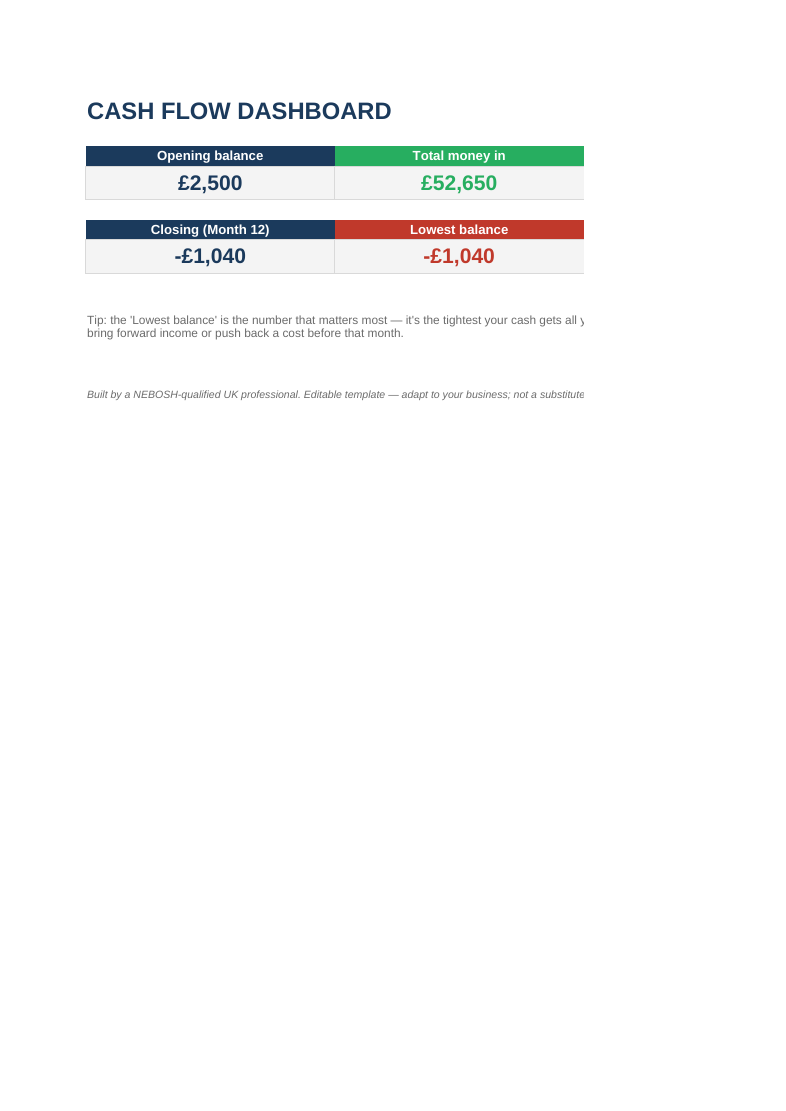
The useful question: after the opening bank balance, expected receipts and expected payments, which month reaches the lowest closing balance — and is it below zero?
Why profit and cash are not the same thing
A sale can appear in your accounts before the customer pays. A large bill can leave the bank before the related work earns anything. VAT, annual insurance, equipment, tax and seasonal dips rarely arrive in a neat monthly rhythm.
That timing gap is why a business can look profitable on paper and still run short of usable cash. A forecast turns those timings into a month-by-month balance.
The five inputs to gather first
- Your realistic opening bank balance.
- Expected customer receipts in the month they should arrive.
- Recurring costs such as wages, rent, utilities and software.
- Irregular costs such as tax, insurance, stock and equipment.
- A deliberately cautious version of any uncertain income.
A small example
| Month | Opening | Money in | Money out | Closing |
|---|---|---|---|---|
| May | £4,000 | £7,000 | £6,300 | £4,700 |
| June | £4,700 | £5,400 | £7,600 | £2,500 |
| July | £2,500 | £4,100 | £7,300 | −£700 |
July is the decision point. The forecast does not fix it; it creates time to bring receipts forward, delay a discretionary cost, arrange funding or change the plan.
Monthly forecast or 13-week cash flow?
A 12-month monthly forecast is useful for broad planning and seasonal visibility. A 13-week weekly model is better when cash is already tight and the exact timing of receipts and payments matters. The two formats solve different jobs.
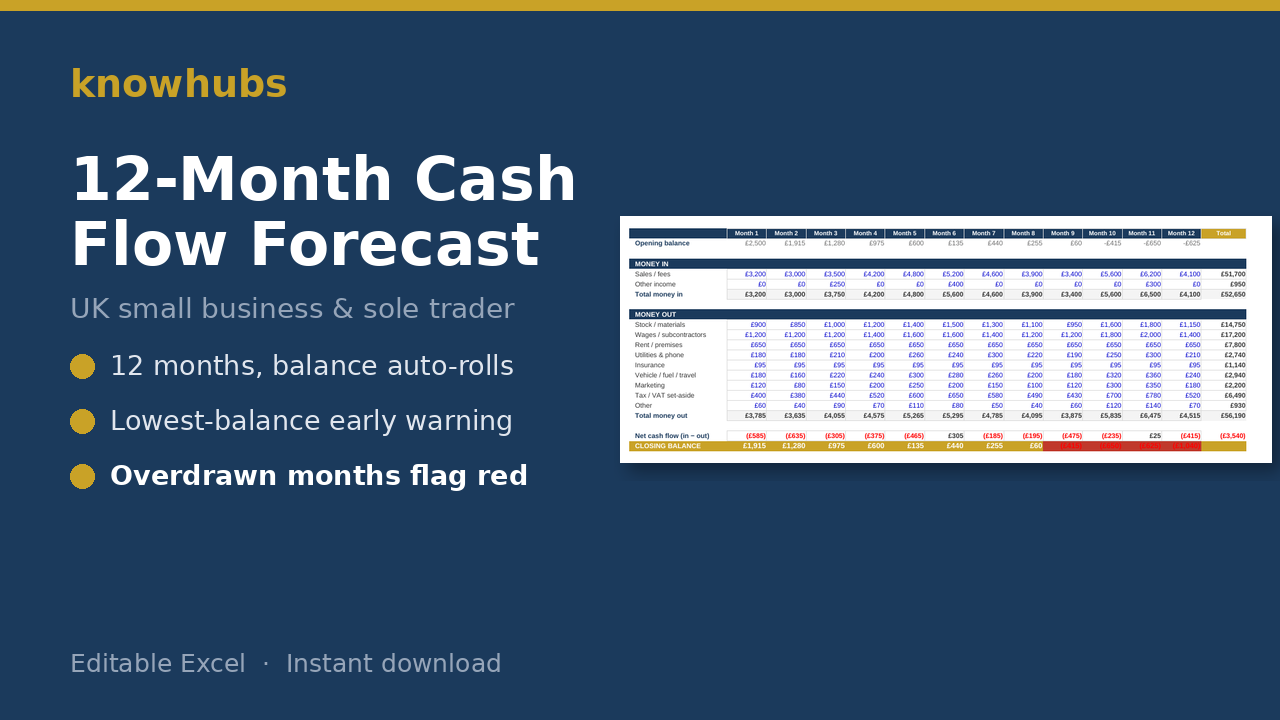
12-Month Cash Flow Forecast · £2.00
Editable Excel workbook with a rolling balance, red deficit warning and simple dashboard. Check the example and limits on this page, then use Etsy for the purchase and download.
Buy the £2 workbook on EtsyLimit: this is a planning method, not accountancy, tax or financing advice. Check the figures against your records and speak to a qualified adviser where the decision warrants it.